


![[HERO] Canada Mortgage Rates Forecast 2026: Fixed vs Variable: Which Is Better For Your Renewal?](https://cdn.marblism.com/thBDyPJCkKK.webp)
If your mortgage renewal is approaching in 2026, you’re likely asking yourself a critical question: should I lock in a fixed rate or take advantage of a variable rate? This decision becomes even more complex when you consider the Bank of Canada’s current stance, economist predictions, and the evolving economic landscape.
In this article, I bring you a comprehensive analysis of the canada mortgage rates forecast for 2026, examining what the boc prime rate is expected to do and providing you with the insights you need to make an informed decision about your renewal. Whether you’re facing your first renewal or you’re a seasoned homeowner, understanding these dynamics is essential to protecting your financial well-being.
Understanding the Bank of Canada’s Position for 2026
The Bank of Canada’s policy rate currently sits at 2.25%, following a series of rate cuts throughout 2024 and early 2025 that brought relief to Canadian borrowers. The central bank’s primary mandate remains controlling inflation while supporting economic growth, and their decisions directly impact the rates you’ll see when renewing your mortgage.
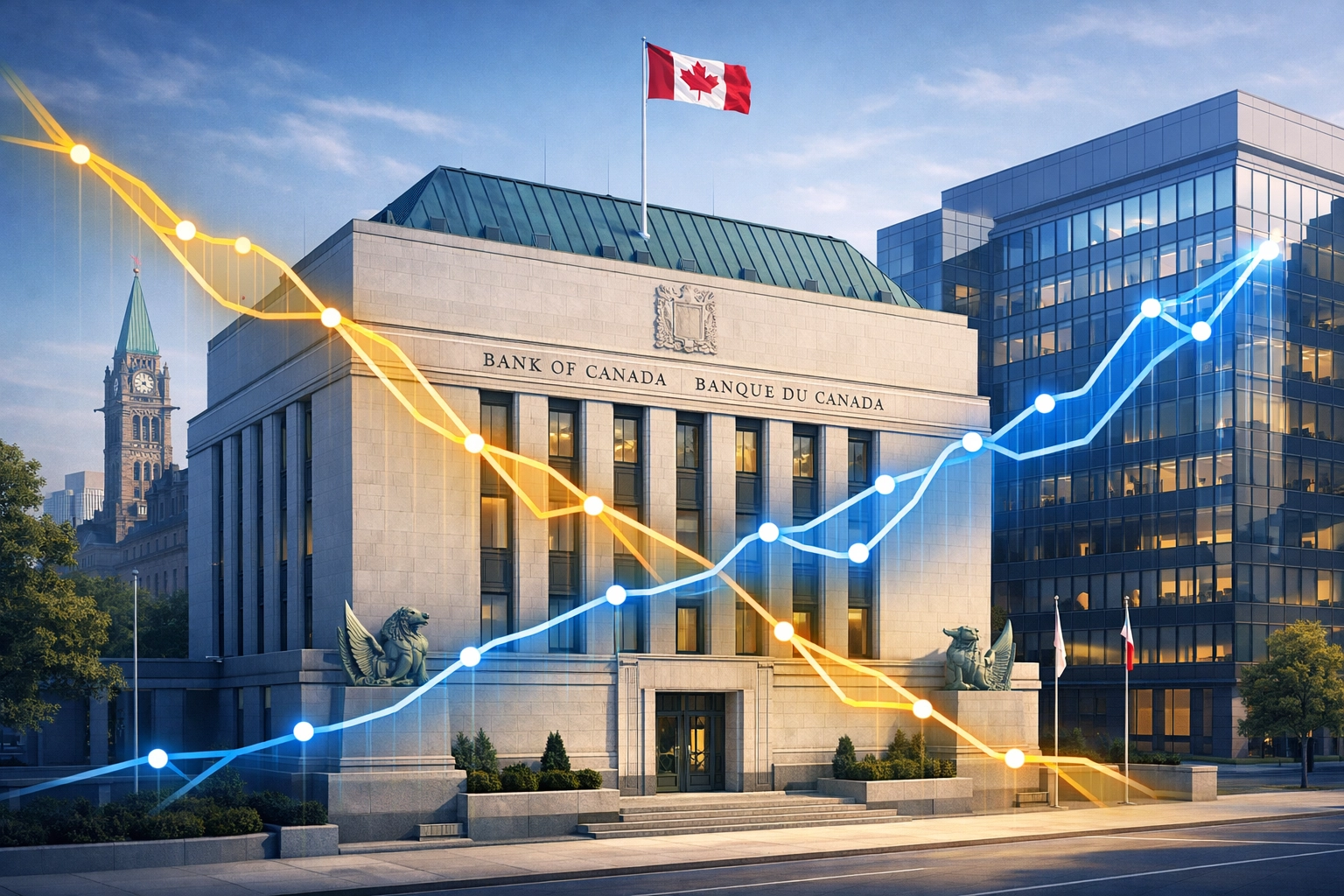
Canada mortgage rates forecast for 2026, the consensus among major financial institutions suggests the BoC will maintain a cautious, steady approach. Most economists predict the policy rate will remain at 2.25% for the majority of the year. This stability reflects a delicate balance: inflation has eased to 2.4%, approaching the Bank’s 2% target, but core inflation remains somewhat sticky, indicating underlying price pressures haven’t fully dissipated.
It’s important to note that not all forecasters agree completely. While institutions like TD Bank, CIBC, and BMO anticipate rates will remain unchanged throughout 2026, Scotiabank and the National Bank of Canada project a potential 50 basis point increase to 2.75% by year-end. This divergence in expert opinion reflects the uncertainty inherent in economic forecasting and underscores why your renewal decision requires careful consideration.
The mortgage rate canada prediction landscape is further complicated by global economic factors, including trade tensions, commodity prices, and international monetary policy decisions that can influence the Bank of Canada’s choices.
Fixed Rate Outlook for 2026
Fixed mortgage rates provide certainty: you know exactly what your payment will be for the entire term. As we enter 2026, five-year fixed rates are hovering around 4.5%, a significant departure from the pandemic-era lows of 1.5-2% that many Canadians secured in 2020-2021.
The good news is that these rates are expected to remain relatively stable throughout 2026. Because fixed rates are primarily influenced by the bond market rather than the BoC’s overnight rate directly, they reflect long-term economic expectations. Current bond market activity suggests lenders anticipate a steady economic environment without dramatic rate movements in the near term.
Key advantages of choosing a fixed rate for your 2026 renewal:
- Predictability: Your payment remains constant regardless of what the Bank of Canada does with its policy rate
- Protection against future increases: If the BoC does raise rates in late 2026 or 2027, you’re insulated from those changes
- Budgeting simplicity: Fixed payments make household financial planning straightforward
- Peace of mind: For many Montreal homeowners, especially those with tight budgets, the psychological benefit of certainty is invaluable
The trade-off, of course, is that you’ll pay a premium for this certainty. Fixed rates currently sit approximately 85-95 basis points higher than variable rates, meaning you’ll pay more in interest throughout 2026 compared to choosing a variable option.
Variable Rate Outlook for 2026
Variable mortgage rates move in tandem with the Bank of Canada’s policy rate, making them more responsive to economic conditions. As of late January 2026, five-year variable rates sit in the 3.55% range, with projections suggesting they’ll inch up slightly to approximately 3.65% by year-end.

This modest increase assumes the BoC maintains its current 2.25% policy rate, with the slight uptick in variable rates reflecting potential adjustments in lender pricing rather than central bank action. The key insight here is that variable rates are expected to remain broadly stable through mid-2026 at minimum.
Advantages of choosing a variable rate for your 2026 renewal:
- Lower initial rate: You’ll save money compared to fixed rates throughout 2026, potentially reducing your mortgage costs by several thousand dollars
- Flexibility: Many variable rate mortgages come with more lenient prepayment privileges and penalty structures
- Benefit from potential cuts: While unlikely in 2026, if economic conditions deteriorate and the BoC cuts rates, you benefit immediately
Risks to consider:
- Asymmetric risk profile: Further rate cuts are unlikely, meaning the risk is tilted toward potential increases rather than decreases
- Inflation uncertainty: If core inflation proves more persistent than expected, the BoC may be forced to raise rates sooner than anticipated
- Budget variability: Your payments could increase with rate changes, requiring financial flexibility
It’s worth noting that bond markets are currently assigning higher probability to rate hikes by late 2026 than they were just months ago, reflecting growing concern about inflation’s stickiness.
Renewal Implications: What to Expect in 2026
Let me be direct: if you’re renewing in 2026, you should prepare for higher payments regardless of which rate type you choose. By the end of this year, approximately 33% of Canadian mortgage holders will have faced renewal, and data suggests payment increases are averaging around 20% for those transitioning from pandemic-era rates.
For fixed-rate borrowers renewing in 2026:
If you locked in a five-year fixed rate in 2021 at 1.8-2.2%, you’re now looking at rates around 4.5%. On a $400,000 mortgage with 20 years remaining, this translates to a payment increase of approximately $400-500 per month: a significant adjustment to your household budget.
For variable-rate borrowers renewing in 2026:
Your situation depends heavily on your mortgage structure. Those with adjustable-rate mortgages (ARMs), where payments change with rate movements, have already been experiencing higher payments. Your renewal increase might be more modest, around 7-15%, as you’ve been gradually adjusting to higher rates.
However, if you hold a variable-rate mortgage (VRM) where your payment stayed fixed but more went to interest rather than principal, your renewal could bring payment increases of 30-40% as you now need to amortize the remaining principal at current rates.
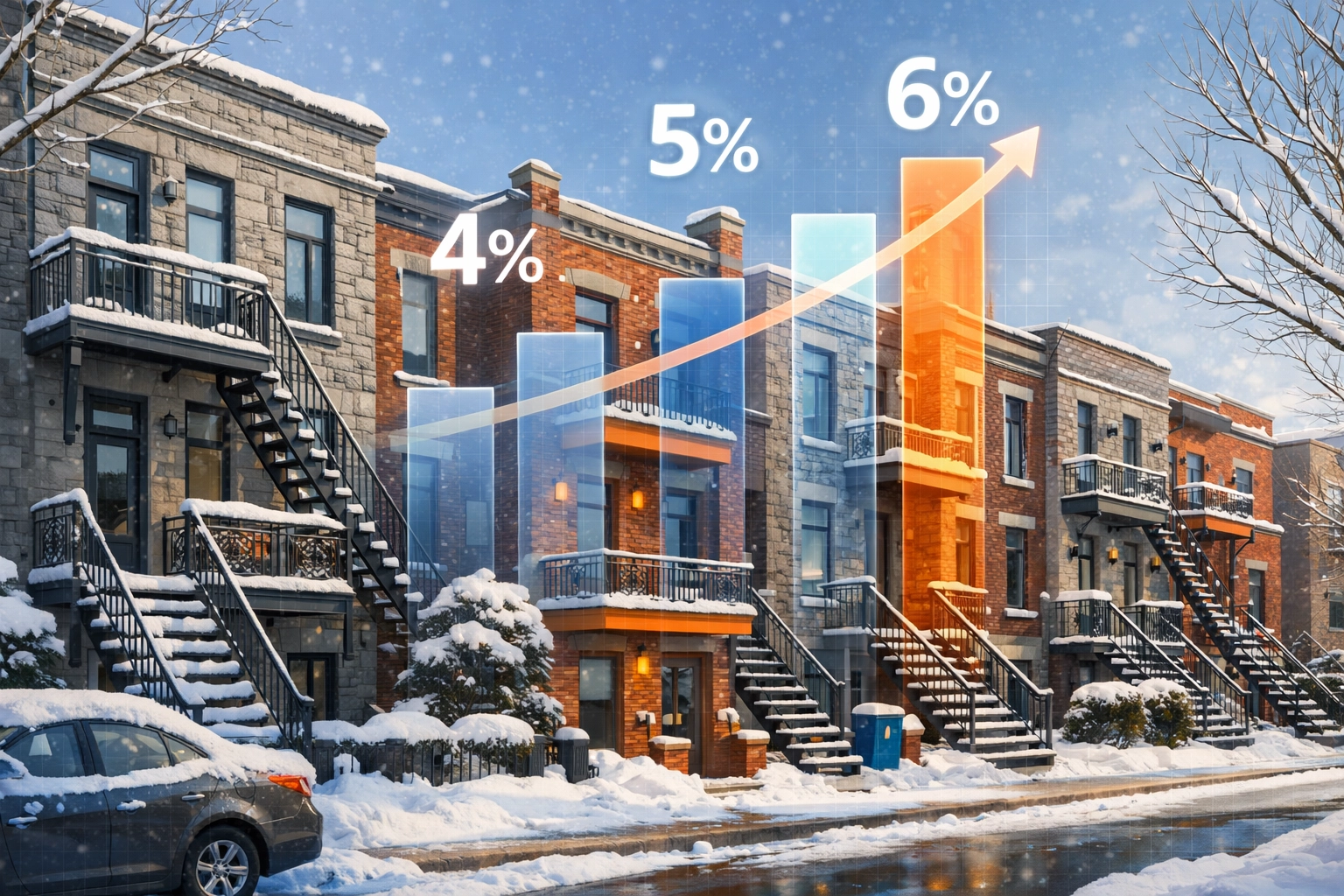
I encourage you to contact your lender now to get a renewal estimate. Don’t wait until 120 days before your maturity date. Understanding your payment options early gives you time to adjust your budget, explore different lenders, and potentially negotiate better terms.
Fixed vs Variable: Which Should You Choose for Your Renewal?
This decision isn’t one-size-fits-all: it depends on your financial situation, risk tolerance, and timeline. Let me break down the decision framework:
Choose a fixed rate if:
- Budget certainty is paramount: You need to know exactly what you’re paying and can’t absorb payment fluctuations
- You’re risk-averse: The thought of potential rate increases keeps you up at night
- Your income is stable but limited: You don’t have much financial cushion to handle payment increases
- You’re planning major life changes: If you’re anticipating career changes, retirement, or other financial shifts, stability helps
- You believe inflation will resurface: If you think the BoC will need to raise rates in 2027-2028, locking in now protects you
Choose a variable rate if:
- You have financial flexibility: You can handle payment increases of 10-20% if rates rise
- You prioritize short-term savings: The approximately $1,500-2,000 annual savings compared to fixed rates matters more than future uncertainty
- You plan to sell or refinance: If you don’t expect to hold the mortgage for the full term, saving now makes sense
- You’re comfortable with calculated risk: You understand and accept that rates could rise
- You have strong income growth prospects: Expected salary increases give you confidence in handling potential payment hikes
The hybrid approach:
Consider splitting your mortgage between fixed and variable rates. Many lenders allow you to allocate, for example, 50% to a fixed rate and 50% to a variable rate. This strategy provides some stability while still benefiting from variable rate savings: a middle ground that can make sense for many Montreal homeowners.
Practical Steps for Your Renewal Decision
Taking action now positions you for success when your renewal arrives. Here are the essential steps I recommend:
1. Get your renewal quote early
Contact your current lender 6-9 months before your maturity date. Don’t assume you need to stay with them: you have options.
2. Shop the market
Speak with at least three different lenders or mortgage brokers. Rates can vary by 20-40 basis points between institutions, which translates to thousands of dollars over a five-year term.
3. Review your financial situation honestly
- What’s your household income stability?
- How much financial cushion do you have?
- Are you carrying other debts that could strain your budget?
- What are your medium-term plans (next 2-5 years)?
4. Run the numbers
Use mortgage calculators to understand payment scenarios. Calculate what a 0.5%, 1%, or 1.5% rate increase would mean for your monthly payment. Can you handle it?
5. Consider your amortization
This is an excellent opportunity to potentially reduce your amortization period if your finances allow. Even keeping the same payment but on a lower rate means more principal paydown, building your equity faster.
6. Understand penalty structures
If you choose fixed, know what it costs to break the mortgage if circumstances change. Variable rates typically have simpler penalty calculations (three months’ interest), while fixed rates use the higher of three months’ interest or interest rate differential (IRD), which can be substantial.
Taking the Next Step
The canada mortgage rates forecast for 2026 presents both challenges and opportunities. While rates remain elevated compared to recent history, stability appears likely for most of the year, giving you time to make a thoughtful decision about your renewal strategy.
Whether you ultimately choose the certainty of a fixed rate around 4.5% or the current savings of a variable rate near 3.55-3.65%, the most important factor is that your choice aligns with your financial situation, risk tolerance, and goals.
At North East Real Estate & Mortgage Agency, we work with Montreal homeowners every day to navigate these exact decisions. Our mortgage specialists stay current on the boc prime rate movements, lender policies, and market conditions that affect your renewal options.
I invite you to contact our mortgage team to discuss your specific situation. We’ll review your current mortgage, analyze your financial position, and present you with renewal options from multiple lenders, ensuring you make the choice that best serves your long-term financial well-being.
Your mortgage renewal doesn’t need to be stressful: with the right information and expert guidance, it becomes an opportunity to optimize your housing costs and continue building equity in your Montreal home.